snow removal cost estimate
What belongs in a snow removal cost estimate?
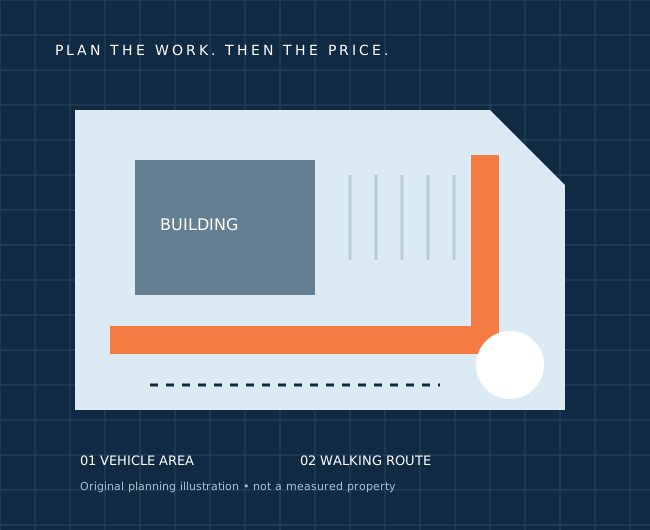
Original IAM explanatory artwork. Not a customer photograph or measured result.
Turn area, time, equipment and service scope into an understandable planning estimate.
Start with the property, not a price per square foot
A useful estimate describes the work before it attaches a dollar amount. Record the surface area to be cleared, the separate walking routes, access constraints and the proposed place for snow. A large open rectangle and a smaller property with parked cars can require very different working time. Area is a starting input, not a complete production model.
Separate the surfaces into workable zones. A visitor route may need different equipment from a vehicle lane. Write down which zones are included so a number produced by a calculator does not silently become a promise to clear the entire property.
 01Start with the real scope
Record the inputs beside the number.
Build a working-time assumption
This calculator divides the area by a production rate you supply, then adds setup and travel time. That rate is an assumption for planning. It is not a manufacturer rating or a claim about your crew. Use your own documented work records when available, and retain a conservative alternative when conditions are uncertain.
Count the people and equipment required together. The crew-hour cost should represent the crew doing this particular task; the equipment rate should represent the equipment needed for it. Avoid multiplying a full crew cost by its headcount again. Keep labour and equipment assumptions visible.
Keep deicing and hauling explicit
Deicing material is entered as a separate amount per visit. That is a budgeting field, not an application recommendation. Actual material choice, quantity and conditions require their own assessment. If a subcontractor handles part of the scope, include the expected cost in the other-cost field and describe the boundary in your proposal.
Snow hauling, return visits and special access arrangements can change the job materially. Do not hide an unknown item inside a precise-looking total. Record it as excluded or unresolved and obtain the information required to price it.
03Make the next step clearRecord the inputs beside the number.
Use the answer to prepare a conversation
The result is a scenario, not a binding quote. Compare a base case with a slower working-rate case and a higher visit-count case. If the range is too wide to support a decision, that is useful information: the site or service assumptions need more work.
Save the scope and inputs with the number. A later comparison only makes sense if it refers to the same zones, service conditions and inclusions. A contractor must confirm the property, timing, availability and commercial terms separately.
Keep exploring
Per-visit or seasonal: compare the same snow service scope →
A commercial snow-removal estimate starts with a site brief →
Margin and markup change a snow-removal estimate differently →